Editorial Team
Editorial byline – Guides & educational content - TheCoinAnalysis.com
Content published under "The Coin Analysis Editorial Team" byline includes guides and educational articles produced by the editorial team. These contents aim to explain the fundamentals of cryptocurrencies, blockchain and their uses, with a factual, neutral and understanding-oriented approach.
This content is written, reviewed and updated by The Coin Analysis editorial team according to our editorial charter.
Understanding Crypto

Crypto basics: what it really is
A beginner-friendly overview of digital currencies, why they exist, and how blockchains make them possible.

Buying crypto: a practical guide
The safest ways to open an account, choose networks, compare fees, and place your first trade.
Crypto wallets: types and best practices
Hot vs cold wallets, seed phrases, and practical tips to avoid common mistakes when self-custodying.
Bitcoin vs Ethereum vs altcoins
How Bitcoin and Ethereum differ in purpose, security, fees, and what ‘altcoins’ actually cover.

Blockchain: how it works
Blocks, validators, finality, and why decentralization matters—without the heavy math.
DeFi: decentralized finance
Decentralized exchanges, lending pools, and how smart contracts remove intermediaries.
NFTs: digital ownership
Digital collectibles, ownership proofs, and the common pitfalls around minting and trading.

Staking: earning by supporting the network
Earning yield by helping secure proof-of-stake networks—risks, rewards, and lockups explained.

Mining: how crypto is produced
From GPUs to ASICs: how miners add blocks, get rewarded, and what impacts profitability.

Web3: user-owned internet
Apps that run on blockchains, wallets as logins, and why open data changes product design.
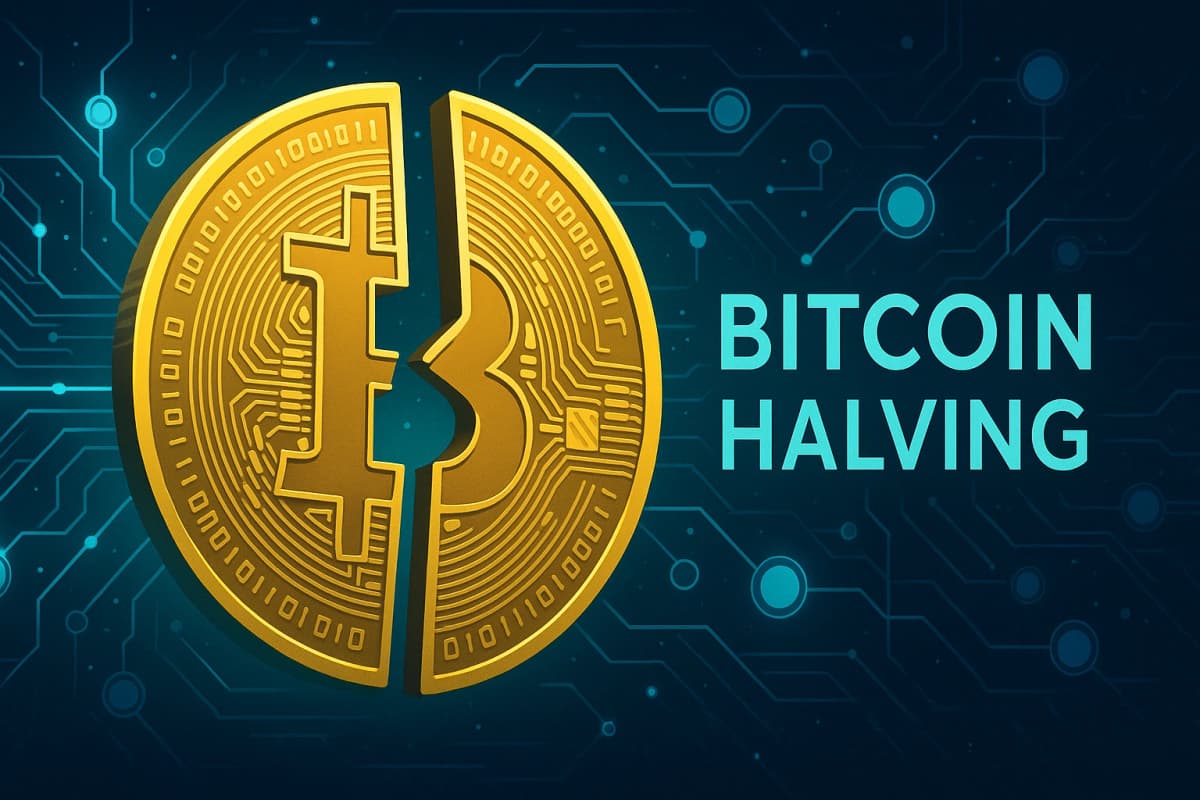
Bitcoin halving explained
A programmed supply cut that affects miner rewards—and why markets care every four years.

Proof of Work explained
The consensus mechanism behind Bitcoin: how miners compete, why it costs energy, and what makes it secure.

Proof of Stake explained
How validators replace miners, why staking matters, and the tradeoffs between energy and capital-based security.

Satoshi: the smallest Bitcoin unit
The atomic unit of Bitcoin, named after its pseudonymous creator: 100 million satoshis equal one BTC.
Genesis Block: the first block of a blockchain
Block zero — the foundation on which every other block in a chain is built, hardcoded and irreplaceable.

Hash rate: measuring blockchain mining power
How much computational work miners are throwing at a network — the headline indicator of Proof-of-Work security.
Mempool: the queue of pending transactions
Where unconfirmed transactions wait before being included in a block — and why its size dictates fees.

UTXO: how Bitcoin tracks balances
Unspent Transaction Outputs — the accounting model Bitcoin uses instead of account balances.

Slippage: when price drifts during a trade
The gap between the price you expected and the price you actually paid — why it happens and how to limit it.

Order book: the live ledger of buyers and sellers
The real-time list of buy and sell offers at every price level — the heart of any centralized exchange.

Market capitalization: total value of a coin's supply
Circulating supply multiplied by current price — the standard yardstick for ranking cryptocurrencies.

Liquidity: how easily an asset can be traded
The depth of a market — how much you can buy or sell without moving the price.

24-hour trading volume
The total notional value of trades over the last day — a quick read on activity and interest.
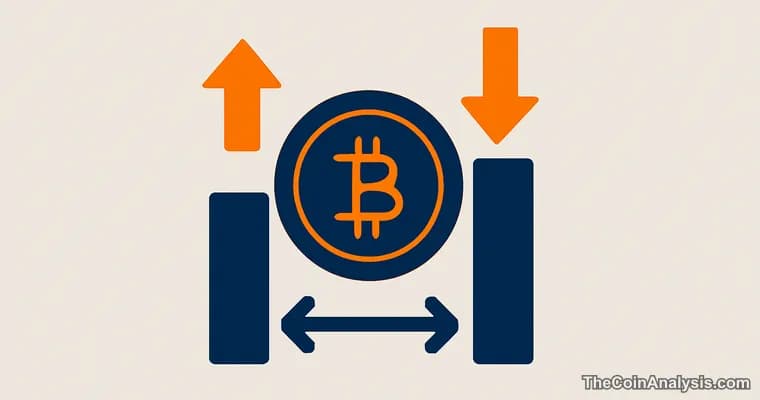
Bid-ask spread: the cost of immediate execution
The price gap between the best buy and the best sell offers — a direct measure of liquidity and trading cost.

Limit order: trading at the price you choose
An order that only executes at your specified price or better — slower than market, but in control of the fill.

Stop loss: capping the damage on a losing trade
An automatic exit order triggered when price moves against you — the basic risk-management tool in any market.

Leverage: trading with borrowed capital
Multiplying your position size using exchange-provided borrowing — bigger wins, faster liquidations.
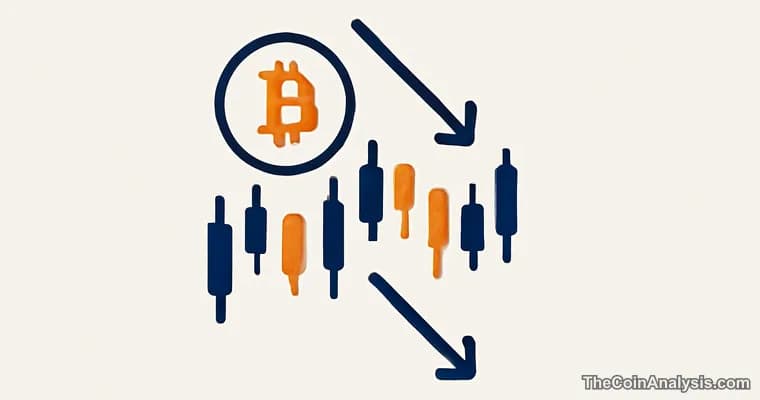
Long and short positions
Going long bets on a price rise; going short bets on a price fall. Both are standard tools in any market.

Funding rate: how perpetual futures track spot
The periodic payment between long and short traders that keeps perpetual contract prices anchored to spot.

Seed phrase: the master key to your wallet
A 12- to 24-word sequence that regenerates every key in your wallet — lose it, lose everything.

Private key: the secret that signs your transactions
The cryptographic secret that proves ownership of an address — never share it, never type it anywhere.

Public key: the address you can safely share
Derived from your private key, it is what others use to send you funds — public by design, safe to share.

Cold wallet: storage that never touches the internet
An offline device or method for holding crypto keys — the gold standard for long-term security.

Hot wallet: convenience over deep security
A wallet running on an internet-connected device — fast and easy, but more exposed than cold storage.

Multi-signature wallet: shared control over funds
Requires multiple keys to authorize a transaction — no single point of failure, no single point of control.
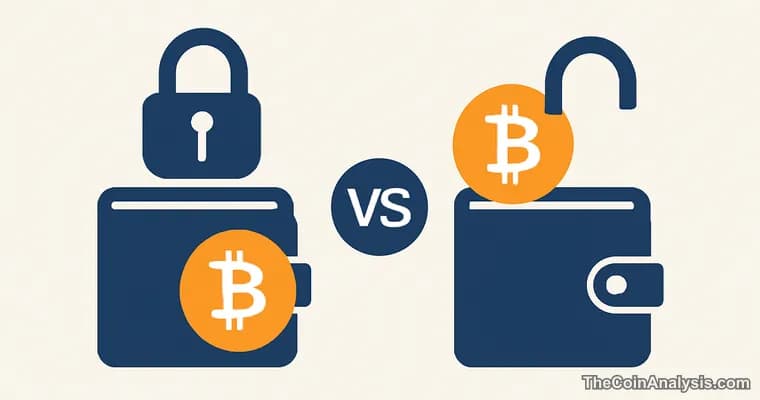
Custodial vs non-custodial wallets
Custodial means someone else holds your keys; non-custodial means you do — a fundamental choice with real consequences.

Gas fee: paying for blockchain computation
The transaction fee that compensates validators for processing your action — variable, sometimes painful, always there.

Crypto address: the destination for transfers
A string of letters and numbers derived from a public key — the equivalent of a bank account number, but irreversible.

Liquidity pool: the engine behind DEX trading
A smart contract holding paired tokens that anyone can swap against — the backbone of decentralized exchanges.

AMM: the algorithm pricing your DEX trades
An Automated Market Maker uses a fixed formula on a smart contract to price swaps without any human matching.

Yield farming: stacking incentives across DeFi
Moving capital across protocols to capture trading fees, lending interest, and token rewards — a high-effort, high-risk pursuit.

Impermanent loss: the LP's silent tax
The loss a liquidity provider suffers when pooled token prices diverge, compared to simply holding both assets.

TVL: Total Value Locked in a protocol
The dollar value of crypto deposited into a DeFi protocol's smart contracts — the standard size measure.
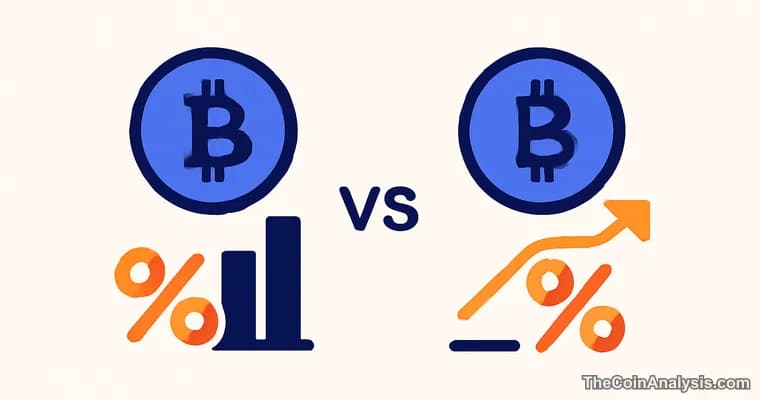
APY vs APR: two ways to quote a yield
APR is simple interest annualized; APY includes compounding. The gap can be huge at high rates.
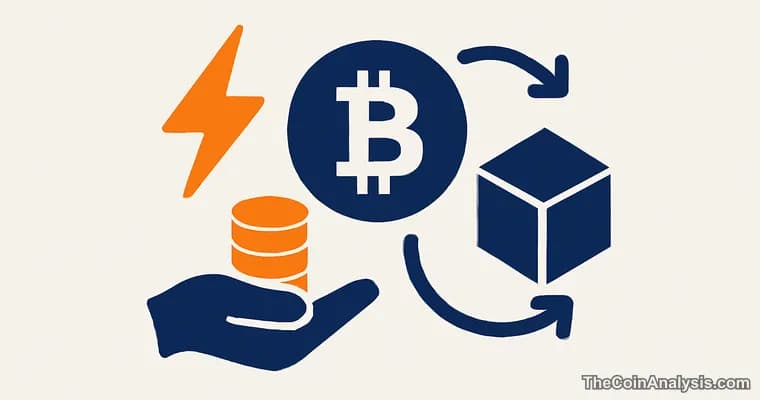
Flash loan: borrow millions, repay in one block
An uncollateralized loan that must be borrowed and repaid in a single transaction — a DeFi-only primitive.
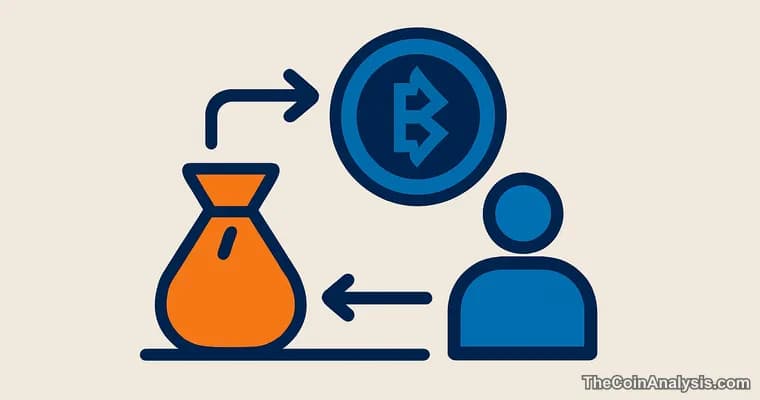
Lending protocol: borrowing and lending on-chain
A smart-contract market where users deposit collateral, borrow against it, and earn interest as lenders.
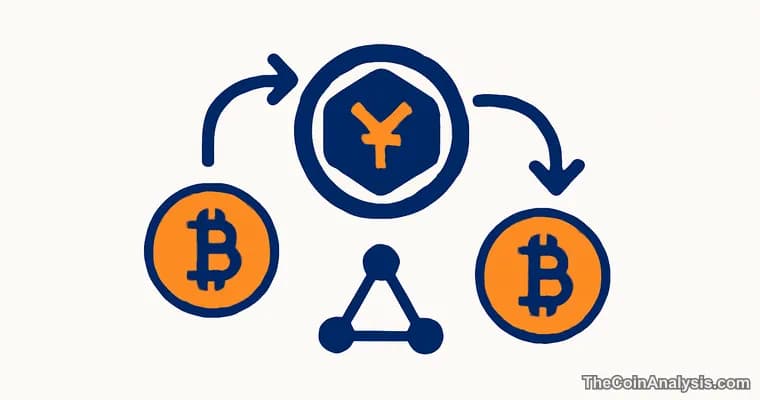
DEX: a Decentralized Exchange
An exchange built entirely from smart contracts — no signup, no custody, no central operator.

CEX: a Centralized Exchange
A traditional exchange operated by a company that holds custody of user funds — fast, liquid, regulated.

Stablecoin: a token pegged to a stable value
A cryptocurrency designed to hold a steady price — usually pegged to the US dollar — for payments and trading.

Altcoin: any cryptocurrency that is not Bitcoin
All non-Bitcoin coins lumped together — from Ethereum and Solana to thousands of long-tail tokens.

Memecoin: tokens driven by community and culture
Tokens with no real utility, valued purely on attention, narrative, and viral momentum.

Token vs coin: what's the difference?
A coin runs on its own blockchain; a token is built on someone else's. The terms get mixed up constantly.

ERC-20: the standard for Ethereum tokens
The technical specification that defines how a fungible token contract behaves on Ethereum.

Layer 2 rollup: scaling Ethereum without compromising security
A separate chain that bundles transactions and posts them to Ethereum — much cheaper, with near-equivalent security.
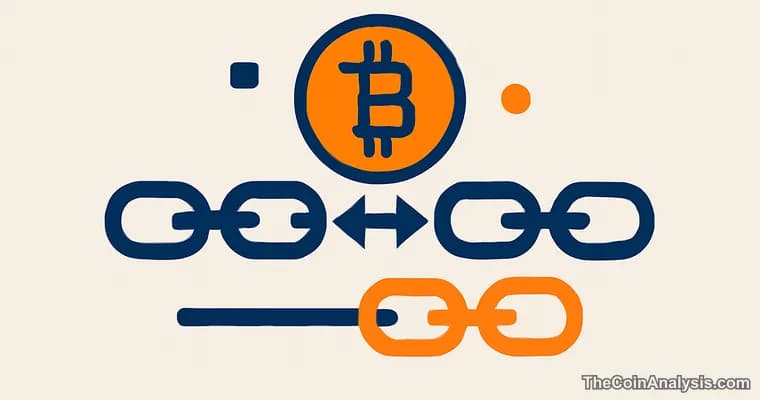
Sidechain: a separate chain bridged to a main one
An independent blockchain that operates alongside another with its own consensus — connected by a bridge.

Cross-chain bridge: moving assets between networks
A protocol that lets tokens travel between blockchains by locking on one side and minting on the other.

Fork: when a blockchain splits or changes rules
A change to a blockchain's protocol that either remains backward-compatible (soft) or creates two chains (hard).

Smart contract: code that executes on a blockchain
A program stored on-chain that runs automatically when its conditions are met — the foundation of every dApp.

HODL: holding through volatility
Born from a typo, it became crypto's signature strategy: ignore the chart, keep the coins.

FOMO: Fear Of Missing Out
The emotional pull to buy something rising fast — usually right before it tops.

FUD: Fear, Uncertainty, and Doubt
Negative narratives — accurate or not — that push prices down through panic rather than fundamentals.

Rug pull: a scam where founders drain the project
When the team behind a token suddenly removes liquidity, dumps holdings, or abandons the project, taking investor funds.

Whale: an account holding enough to move markets
Individuals or entities whose positions are large enough that their trades visibly affect price.