Custodial vs non-custodial wallets
Who Controls the Keys?
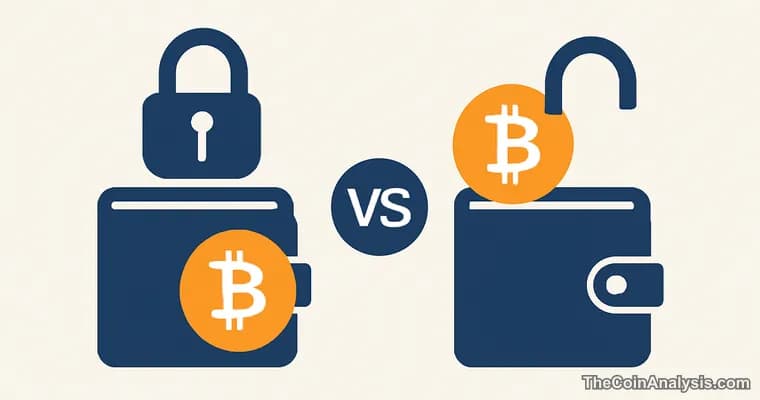
A custodial wallet is one where a third party—typically an exchange like Coinbase, Binance, or Kraken—holds the private keys for you. You see a balance and can request transfers, but you do not actually have the keys. The provider does. If they get hacked, freeze your account, or go bankrupt, your access to funds depends entirely on them.
A non-custodial wallet—MetaMask, Phantom, Ledger, Trezor, and others—gives you direct control over the keys. The wallet software runs on your device, holds the keys locally (encrypted), and signs transactions itself. No one can freeze your funds, restrict your transactions, or lose them in a corporate failure. The phrase "not your keys, not your coins" captures the philosophy: custody equals ownership.
The tradeoffs run both ways. Custodial wallets are easier to use, offer customer support, and let you reset passwords if you forget them. Non-custodial wallets are harder—lose your seed phrase and the funds are gone forever, with no help desk to call. Most active users hold both: custodial for fiat on-ramps and active trading, non-custodial for self-sovereign storage of meaningful balances.
Security and Risk Considerations
Custodial wallets centralize risk because your funds depend on the security and integrity of the service provider. If the exchange suffers a hack, as has happened multiple times in crypto history, users’ funds can be stolen or temporarily inaccessible. Additionally, custodial services may comply with government regulations that allow them to freeze accounts or restrict withdrawals under certain circumstances.
Non-custodial wallets, on the other hand, place the responsibility for security squarely on the user. While this reduces the risk of large-scale hacks affecting many users at once, it increases the chance of individual loss due to human error. Losing your seed phrase or private key means losing access to your funds permanently. This is why many non-custodial wallets encourage users to back up their seed phrases securely and consider hardware wallets for added protection.
Hardware wallets like Ledger and Trezor are examples of non-custodial wallets that store keys offline, providing a layer of defense against malware and phishing attacks. These are often referred to as cold wallets, contrasting with software wallets connected to the internet, or hot wallets. Choosing between hot and cold wallets depends on your balance between convenience and security.
User Experience and Accessibility
Custodial wallets generally offer a smoother user experience, especially for newcomers. They handle complex technical details like key management, transaction signing, and network fees behind the scenes. This makes them more accessible for users who want to buy, sell, or trade cryptocurrencies without worrying about the underlying blockchain mechanics.
Non-custodial wallets require users to understand concepts like seed phrases, transaction fees (often called gas fees on Ethereum and similar networks), and wallet backups. While modern wallet interfaces have improved usability, the responsibility for managing keys and securing funds remains with the user. This can be intimidating for beginners but is essential for those who prioritize control and privacy.
Some wallets combine features of both types through multi-signature setups or social recovery mechanisms, which can help balance security with usability. These solutions add layers of protection by requiring multiple approvals for transactions or allowing trusted contacts to help recover access without compromising full control.
Use Cases and Practical Examples
Many users maintain both custodial and non-custodial wallets to leverage the strengths of each. For example, a trader might keep funds on a custodial exchange wallet for quick access to trading pairs and fiat withdrawals. Meanwhile, they store larger amounts in a non-custodial hardware wallet for long-term holding, reducing exposure to exchange risks.
Decentralized finance (DeFi) applications generally require non-custodial wallets because they interact directly with smart contracts on the blockchain. Using a custodial wallet in these scenarios is often impossible or defeats the purpose of decentralization. Wallets like MetaMask serve as gateways to DeFi protocols by allowing users to sign transactions themselves without intermediaries.
Another common misconception is that custodial wallets offer better privacy. In reality, custodial providers often collect personal information to comply with regulations like KYC (Know Your Customer), whereas non-custodial wallets can be used pseudonymously, depending on how they are funded and operated.
Final Thoughts on Custodial vs Non-Custodial
Choosing between custodial and non-custodial wallets ultimately depends on your priorities: convenience and support versus control and security. Understanding the distinction is fundamental to managing your crypto assets responsibly. Whether you prioritize ease of use or self-sovereignty, knowing how your private keys are handled is critical to navigating the crypto ecosystem safely.
For those interested in learning more about the technical foundations behind wallets, exploring topics like blockchain technology and how crypto wallets work can provide valuable context. This knowledge helps users make informed decisions about custody and security in their crypto journey.