Web3: user-owned internet
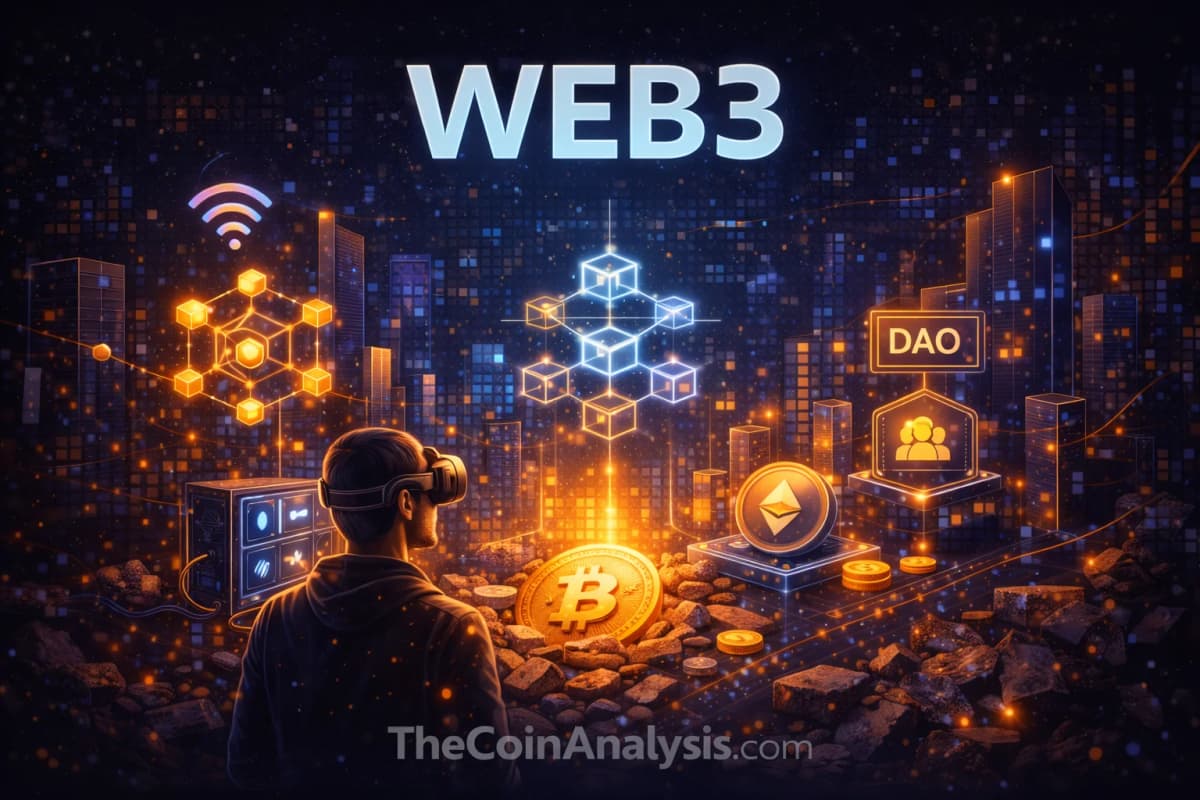
A New Internet Architecture
Web3 represents a vision for the next evolution of the internet, built on blockchain technology and principles of decentralization. Where Web2 concentrated power in a handful of platforms that control user data and monetize attention, Web3 proposes an alternative where users own their digital assets, control their identities, and participate in governance of the services they use.
The term captures a broad set of ideas rather than a single technology or protocol. Some definitions focus on cryptocurrency and token-based economies. Others emphasize decentralized infrastructure and censorship resistance. Still others highlight user ownership and data portability. All share skepticism toward centralized platforms and optimism about blockchain-enabled alternatives.
Understanding Web3 requires separating genuine innovation from hype and speculation. Real advances are happening in how digital ownership, coordination, and value transfer can work. Simultaneously, the label gets attached to projects that are simply cryptocurrencies with marketing, scams seeking credibility, or solutions looking for problems. Critical evaluation serves better than blanket enthusiasm or dismissal.
From Web1 to Web3
Web1 refers to the early internet of static pages and read-only content. Users consumed information published by others. Interaction was limited, but anyone could create and host websites without permission from gatekeepers. The architecture was decentralized by default, with no single company controlling the infrastructure.
Web2 brought interactivity and user-generated content. Social media, sharing platforms, and cloud services enabled anyone to publish easily. But this convenience came at a cost. A few massive platforms captured most of the value, mining user data for advertising and wielding enormous power over public discourse. Users became products rather than customers.
Web3 proposes adding ownership and decentralization back to the interactive web. Users can own their digital assets rather than renting access from platforms. Services can run on decentralized infrastructure resistant to censorship or shutdown. Economic value can flow to creators and participants rather than being extracted by intermediaries. The vision is compelling even if implementation remains challenging.
Core Web3 Concepts
Decentralization means distributing control across many participants rather than concentrating it in single entities. Decentralized applications run on networks of computers with no single point of failure or control. Decentralized organizations make decisions through voting rather than executive fiat. Decentralized finance operates without banks or brokerages. The degree of actual decentralization varies widely across projects claiming the label.
Token ownership provides economic stakes and governance rights in protocols and platforms. Holding tokens might entitle you to vote on development decisions, receive revenue shares, or access exclusive features. This aligns user and platform incentives differently than advertising-funded services where users are the product being sold.
Self-sovereign identity means controlling your own digital identity rather than depending on platform accounts. Your wallet address becomes your login across applications. Your credentials, reputation, and social graph can move with you between services. In theory, you never again lose access because a platform bans your account or goes out of business.
Composability describes how Web3 applications can build on each other like interoperable building blocks. Open smart contracts let new projects integrate existing functionality without asking permission. This creates network effects where each new application adds value to everything else in the ecosystem. The term composability captures this ability to combine components freely.
Web3 Applications
Decentralized finance remains the most developed Web3 vertical. Lending, trading, and yield generation without traditional intermediaries demonstrate what blockchain-native financial services can look like. The billions in value locked across DeFi protocols show genuine demand for these services despite their complexity and risks.
Non-fungible tokens enable digital ownership of art, collectibles, gaming items, and access rights. While the speculative bubble has deflated, the underlying technology continues finding applications. Creator monetization, digital credentials, and token-gated access represent potentially durable use cases beyond speculative trading.
Decentralized social networks attempt to offer alternatives to Twitter, Facebook, and other platforms. Projects like Lens Protocol and Farcaster let users own their social graphs and content, moving between different front-end applications while maintaining their follower relationships. Adoption remains niche but the experiments continue.
Decentralized autonomous organizations, or DAOs, coordinate collective action through on-chain governance. Token holders vote on proposals, with results executed automatically by smart contracts. DAOs manage protocol treasuries, fund public goods, and operate investment vehicles. The format enables new organizational structures not possible before blockchain.
Decentralized storage and computing projects like Filecoin, Arweave, and Akash offer alternatives to centralized cloud providers. Users pay with tokens for distributed storage and computation that no single entity controls. These services power other Web3 applications while providing censorship-resistant infrastructure.
The Reality Check
Web3 faces substantial challenges that temper enthusiasm with practical difficulties. User experience remains poor compared to Web2 alternatives. Managing keys, understanding gas fees, and navigating complex interfaces require technical sophistication most people lack. Onboarding barriers limit adoption to relatively sophisticated users.
Scalability constraints mean blockchain applications cannot yet match the throughput of centralized services. Decentralization comes with performance costs that matter for applications requiring speed and volume. Layer 2 solutions and alternative architectures are addressing these limitations but have not fully solved them.
Many Web3 projects are not as decentralized as they claim. Venture capital ownership concentrates token holdings among insiders. Core teams control development roadmaps. Foundation multisigs hold keys to critical contracts. The decentralization ideal often exceeds the reality of how projects actually operate.
Speculation and scams have tainted the Web3 brand. Ponzi schemes, rug pulls, and worthless tokens have cost users billions. The space attracts bad actors because pseudonymity and irreversibility make fraud easier to execute and harder to prosecute. Legitimate builders struggle against this reputational headwind.
Regulatory uncertainty clouds the entire space. What tokens are securities? Which activities require licenses? How do existing laws apply to decentralized entities? These questions remain largely unanswered, creating compliance risks that chill legitimate development while leaving scammers undeterred.
What Might Succeed
Web3 will likely succeed where its unique properties provide genuine advantages over alternatives. Applications requiring censorship resistance, permissionless access, or transparent operation benefit from blockchain architecture. Use cases where centralized alternatives work fine have less reason to adopt the complexity and costs of decentralization.
Financial applications seem most promising given that finance inherently involves transferring value and blockchain excels at exactly this. Cross-border payments, programmable money, and open financial infrastructure address real problems in ways traditional systems struggle to match.
Identity and credentials may benefit from user control and portability, reducing dependence on centralized platforms that can revoke access or be hacked. The ability to prove things about yourself without revealing unnecessary information has obvious privacy benefits.
Creator monetization through direct relationships with audiences, enabled by NFTs and tokens, could reshape how artists, musicians, and writers earn income. Whether this reaches mainstream adoption or remains niche depends on user experience improvements and cultural shifts around digital ownership.
Approaching Web3 Thoughtfully
Engaging with Web3 requires balancing opportunity awareness with risk management. Genuine innovation is happening, but so is massive speculation and fraud. Not every blockchain project is revolutionary; most will fail. Distinguishing signal from noise requires effort and healthy skepticism.
Start by learning fundamentals rather than chasing returns. Understand how blockchain works, what DeFi protocols actually do, and how NFTs function. This knowledge helps evaluate opportunities and avoid obvious traps. Education protects better than any other strategy.
Experiment with small amounts to learn how things work before committing significant resources. Losing a little while learning costs less than losing a lot from ignorance. Treat initial exploration as education rather than investment.
The Web3 story is still being written. Some current projects will become foundational infrastructure. Most will fade away. Approaching the space with curiosity, caution, and continuous learning positions you to participate in whatever emerges while protecting against the considerable risks involved.