Sidechain: a separate chain bridged to a main one
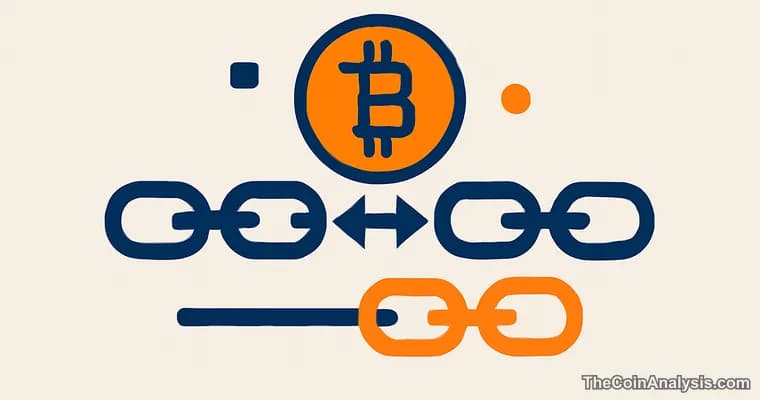
Connected But Independent
A sidechain is an independent blockchain that runs in parallel to another (often Ethereum) with its own consensus, validators, and block production. Tokens move between the two through a bridge, but the sidechain does not inherit the security of the main chain the way a rollup does. If the sidechain's validators collude or fail, the chain can be compromised regardless of what happens on the main chain.
Polygon PoS is the most prominent example next to Ethereum—a fully separate proof-of-stake chain with its own validator set and faster, cheaper transactions. Liquid and Rootstock connect to Bitcoin in similar ways. Sidechains typically offer lower fees and higher throughput than the chain they sit next to, at the cost of trusting their own consensus layer rather than the parent's.
The line between sidechain and Layer 2 has blurred over time, but the distinction is real. A rollup posts data and validity guarantees back to L1; a sidechain just runs its own consensus and trusts a bridge contract to mirror assets. For users, this means thinking about who validates the chain you are on and what assumptions you are making about that validator set's honesty—not just looking at the marketing label.
How Sidechains Work
Sidechains operate by allowing assets to move freely between the main chain and the sidechain using a bridge. When tokens are transferred from the main chain to the sidechain, they are typically locked or escrowed on the main chain while an equivalent amount is minted or unlocked on the sidechain. This mechanism ensures that the total supply remains constant across both chains.
Because sidechains have their own consensus mechanisms—whether proof-of-stake, proof-of-authority, or other models—they validate transactions independently. This independence allows sidechains to customize features like block times, transaction fees, and governance rules to better suit specific use cases. However, it also means that the security guarantees of the main chain do not automatically extend to the sidechain.
The bridge itself is a critical component, acting as the communication layer between the two chains. It must be trusted to correctly handle deposits and withdrawals, and any vulnerabilities in the bridge can lead to asset loss or theft. This adds another layer of risk beyond the consensus security of the sidechain itself.
Security Considerations
Unlike rollups, which derive their security from the main chain by posting transaction data and validity proofs back to it, sidechains rely on their own validator set and consensus rules. This means that the security of assets on a sidechain depends heavily on the honesty and robustness of its validators.
If a sidechain's validators collude or are compromised, they could potentially censor transactions, reverse them, or even steal funds. Because sidechains do not automatically inherit the main chain’s security, users must trust the sidechain’s governance and consensus mechanisms. This trust assumption is a key difference from Layer 2 solutions that leverage the main chain’s security model.
Users interacting with sidechains should also be aware of the risks associated with the bridge technology. Bridges can be complex smart contracts or multi-signature setups that, if flawed or attacked, could result in locked or lost funds. This has been a vector for several high-profile exploits in the crypto space.
Use Cases and Examples
Sidechains are often used to provide faster and cheaper transactions than the main chain can offer, making them attractive for applications that require high throughput or lower fees. For example, Polygon PoS has become a popular sidechain for Ethereum, enabling decentralized applications (dApps) to operate with significantly reduced gas costs while maintaining compatibility with Ethereum’s tooling and ecosystem.
Bitcoin also has sidechains like Liquid and Rootstock (RSK). Liquid is designed to facilitate faster and more confidential Bitcoin transactions between exchanges and traders, while Rootstock brings smart contract functionality to Bitcoin by running an Ethereum Virtual Machine-compatible sidechain secured by merged mining.
These examples highlight how sidechains can extend the capabilities of a main chain by offering specialized features or improved performance, while still enabling interoperability through bridging.
Sidechains vs. Layer 2 Solutions
The distinction between sidechains and Layer 2 solutions can sometimes be confusing because both aim to scale blockchain networks and reduce fees. However, the fundamental difference lies in their security models and how they interact with the main chain.
Layer 2 rollups, such as Optimistic and ZK-rollups, post transaction data and validity proofs back to the main chain, inheriting its security guarantees. This means that even if the Layer 2 network fails, users can recover their funds on the main chain. Sidechains, in contrast, do not post such proofs and rely entirely on their own consensus and validator honesty.
For users, this means evaluating the trade-offs between decentralization, security, and performance. While sidechains can offer faster and cheaper transactions, they require trusting a separate validator set and the bridge infrastructure. Layer 2 rollups provide stronger security assurances but may have different performance characteristics or complexity.
Understanding these differences is important when choosing where to hold assets or execute transactions, especially for those concerned with security and trust assumptions in decentralized finance (DeFi).