Cross-chain bridge: moving assets between networks
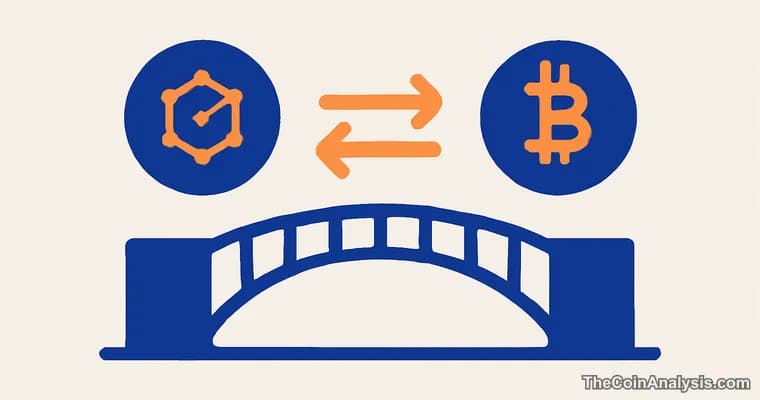
How Tokens Cross Networks
A cross-chain bridge is a protocol that lets value move between two separate blockchains. The standard pattern is lock-and-mint: you deposit tokens on Chain A, the bridge locks them there, and an equivalent amount of wrapped tokens is minted on Chain B for you to use. To go back, you burn the wrapped version, and the original is released on Chain A. This mechanism ensures that the total supply remains constant across both chains, preventing double-spending or inflation.
Bridges are the connective tissue of a multi-chain ecosystem. Without them, ETH on Ethereum and ETH on Arbitrum would be unrelated assets. Major bridges include the native rollup bridges (Arbitrum, Optimism, Base), specialized fast bridges (Across, Stargate, Synapse), and cross-ecosystem bridges (Wormhole, LayerZero, Axelar) that connect very different chains like Ethereum and Solana. These bridges enable users to access decentralized applications (dApps) and liquidity pools across multiple blockchains seamlessly.
The lock-and-mint model typically involves smart contracts on both chains. When tokens are locked on the source chain, a message or proof is sent to the destination chain to trigger minting. This communication can be handled by validators, relayers, or oracles, depending on the bridge’s design. Some bridges use a decentralized network of validators, while others rely on a smaller set of trusted parties, which impacts security and trust assumptions.
Types of Cross-Chain Bridges
There are several types of bridges, each with different trade-offs in speed, security, and decentralization. Native rollup bridges connect layer-2 solutions like Arbitrum and Optimism directly to Ethereum, often benefiting from the underlying security of the mainnet. These bridges are generally faster and more secure because they are designed and maintained by the same teams building the rollups.
Specialized fast bridges like Across, Stargate, and Synapse focus on providing quick transfers between popular chains, often using liquidity pools to reduce waiting times. Instead of waiting for tokens to be locked and minted, these bridges sometimes use liquidity providers who front the tokens on the destination chain, settling balances later. This approach improves user experience but introduces counterparty risk.
Cross-ecosystem bridges such as Wormhole, LayerZero, and Axelar connect fundamentally different blockchains with distinct architectures, consensus mechanisms, and token standards. These bridges require more complex designs to handle differences in finality times, message formats, and security models. Their ability to link chains like Ethereum and Solana unlocks broader interoperability but also increases technical challenges.
Security Risks and Considerations
Bridges have been the single largest source of theft in DeFi history. Hundreds of millions have been lost to exploits of Wormhole, Ronin, Nomad, Harmony, and others, usually through validator-signing-key compromise or smart contract bugs. The fundamental issue is that bridges aggregate large amounts of value under custodial assumptions that vary by design. This aggregation creates a lucrative target for attackers, who may exploit vulnerabilities in code or governance.
Because bridges often rely on a set of validators or multisignature wallets to approve token transfers, the security depends heavily on the trustworthiness and decentralization of these parties. For example, if a single validator’s key is compromised, an attacker could mint tokens on the destination chain without locking the originals, effectively creating counterfeit assets. This risk is why some bridges use multi-signature schemes or threshold cryptography (MPC) to distribute control.
Before using a bridge, check who controls the locking contract, whether it uses MPC or multisig, whether it has been audited, and how it has performed under stress. Audits can identify vulnerabilities but do not guarantee safety, especially if the bridge’s design involves centralized components. Users should also be aware of the bridge’s withdrawal times and any delay mechanisms that protect against fraud.
Common Use Cases and Misconceptions
Cross-chain bridges enable users to diversify their holdings across different blockchains, access unique dApps, and take advantage of varying fee structures and network speeds. For example, a user might bridge ETH from Ethereum to a layer-2 rollup to save on gas fees while trading on a decentralized exchange. Similarly, bridging stablecoins to another chain can facilitate cross-chain yield farming or lending.
A common misconception is that bridging tokens creates new tokens out of thin air. In reality, the lock-and-mint process ensures that tokens are always backed by an equivalent locked amount on the original chain. However, because the wrapped tokens are separate smart contracts, their value depends on the bridge’s security and reputation. If a bridge fails or is hacked, wrapped tokens might lose value or become unusable.
Another misunderstanding is that all bridges are equally secure. In fact, bridges vary widely in their trust models and technical complexity. Some are fully decentralized, while others operate with centralized custodians. Users should research and understand the specific bridge’s architecture and risk profile before transferring significant amounts of value.
The Future of Cross-Chain Bridges
As the blockchain ecosystem grows more diverse, cross-chain bridges will become increasingly important for interoperability. Emerging technologies like optimistic and zero-knowledge rollups, as well as new consensus mechanisms, will influence bridge designs. Protocols such as LayerZero aim to provide unified messaging layers that reduce complexity and improve security by minimizing trust assumptions.
In addition, developments in decentralized finance and cross-chain composability will depend heavily on reliable bridges. The ideal bridge balances speed, security, and decentralization, enabling seamless movement of assets and data across chains. Innovations in cryptographic proofs and distributed validator networks may help reduce the risks currently associated with bridging.
Users interested in exploring multi-chain strategies should also familiarize themselves with related concepts such as crypto wallets that support multiple chains and the differences between custodial and non-custodial solutions. Understanding these fundamentals helps manage risks when moving assets across networks.