Multi-signature wallet: shared control over funds
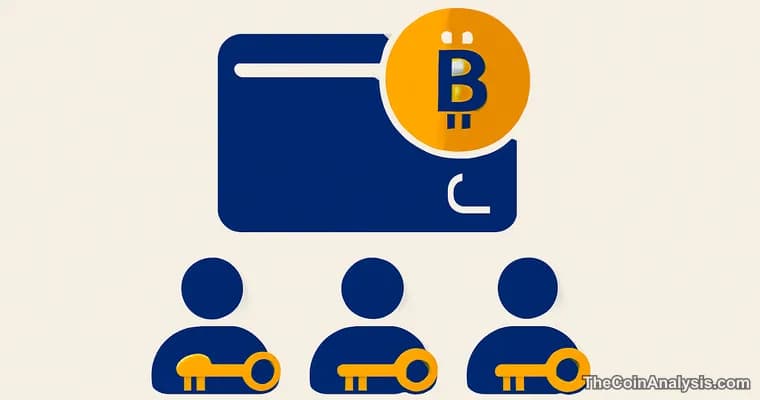
Distributing Trust Across Keys
A multi-signature—or multisig—wallet requires more than one private key to approve a transaction. The most common configuration is M-of-N: for example, 2-of-3 means three keys exist and any two are needed to sign. The signing keys can be held by different people, different devices, or different geographic locations.
Multisig solves a fundamental security problem of single-key wallets: any single compromised key, lost device, or coerced individual can drain the funds. With a 2-of-3 setup, an attacker who steals one key still cannot move anything. You who lose one key can still recover with the remaining two. Organizations use multisig to require co-signers on treasury transactions, eliminating the risk that any one employee can unilaterally move funds.
The flip side is operational complexity. Setting up multisig requires careful planning—who holds which key, how they are stored, what happens if a holder becomes unreachable. Signing a transaction takes longer because each party must independently review and sign. Solutions like Gnosis Safe on Ethereum make multisig usable for DAOs and treasuries by providing a clear interface, transaction queue, and integrations with the wider DeFi ecosystem.
How Multi-Signature Wallets Work
At its core, a multisig wallet is a type of smart contract or script that enforces the rule that multiple signatures are required before funds can be moved. Unlike a traditional wallet controlled by a single private key, a multisig wallet holds funds in an address that can only be spent when the required number of keys sign the transaction. This approach distributes control and reduces the risk of theft or accidental loss.
The M-of-N scheme is flexible: for example, a 3-of-5 wallet means that out of five keys, any three signatures are needed to authorize spending. This allows organizations or groups to balance security and convenience. If too many signatures are required, it can slow down operations; too few, and the security benefits diminish. The keys themselves can be stored in hardware wallets, mobile devices, or even paper backups, enhancing resilience against physical loss or hacking.
Use Cases and Benefits
Multisig wallets are widely used by cryptocurrency exchanges, decentralized autonomous organizations (DAOs), and individuals who want to add an extra layer of security. For exchanges, multisig ensures that no single employee can move large amounts of funds without approval, reducing insider risk. DAOs use multisig to enforce collective decision-making, requiring multiple members to agree before funds are spent.
For individual users, multisig wallets can protect against common risks like device theft or loss. For example, a user might keep keys on a hardware wallet at home, a mobile device, and a trusted friend’s location. Losing one device doesn’t mean losing access to funds, and a stolen device alone is not enough to drain the wallet. This distributed trust model is a practical way to increase security without relying on a single point of failure.
Challenges and Considerations
While multisig wallets offer enhanced security, they also introduce operational challenges. Coordinating multiple key holders requires clear communication and trust among participants. If one or more key holders become unreachable or lose their keys, recovering access can be complicated or impossible without a predefined recovery plan. This makes it essential to establish protocols for key backup and emergency access.
Another challenge is transaction speed. Since multiple signatures are needed, each key holder must review and sign transactions independently, which can slow down routine transfers. This trade-off between security and convenience means multisig is often best suited for managing larger funds or organizational treasuries rather than everyday spending.
Additionally, multisig implementations vary across blockchains. Bitcoin uses a scripting language to enable multisig transactions, while Ethereum multisig wallets are often implemented as smart contracts. Understanding the underlying technology is important for users to avoid mistakes and ensure compatibility with wallets and services. For more on how smart contracts enable multisig on Ethereum, see smart contracts.
Popular Multisig Solutions and Future Trends
Several user-friendly multisig solutions have emerged to simplify setup and management. Gnosis Safe is one of the most popular multisig wallets on Ethereum, offering an intuitive interface, integration with decentralized finance (DeFi) protocols, and tools for managing approvals and transaction history. For Bitcoin, wallets like Electrum support multisig with configurable M-of-N schemes and hardware wallet compatibility.
Looking ahead, multisig technology continues to evolve with innovations like threshold signatures and multi-party computation (MPC). These advanced cryptographic techniques aim to reduce the number of signatures needed on-chain while preserving security, improving efficiency, and enhancing privacy. Such developments could make multisig even more practical for everyday users and complex organizational structures.
Understanding multisig wallets is a key step toward safer cryptocurrency management, especially as digital assets become more valuable and integral to financial systems. For a deeper dive into how wallets store and protect keys, see crypto wallets.