
Storage Fees Stay Despite Contract Risks
Ethereum developers have locked in their decision to introduce higher storage costs on the network, sticking with the original plan for the Glamsterdam upgrade despite warnings about potential impacts on existing smart contracts. The core of this upgrade, known as EIP-8037, will increase the gas fee for creating new accounts by roughly sevenfold and make deploying a 24 kB contract about eight times more expensive than before. These changes are designed to slow the rapid growth of Ethereum’s database—currently projected at around 120 GiB per year—and to better align costs with the actual strain that new data places on the network.
However, these measures have not come without controversy. Security firm ChainSecurity highlighted at least 13 real-world examples where these pricing adjustments could weaken safety checks in existing contracts, raising concerns that some applications may fail or become vulnerable under the new rules.
Seven Weeks of Delays Finally End
The decision to keep EIP-8037 unchanged puts an end to a seven-week delay that has held up Ethereum’s next major testnet upgrade. Developers originally planned to activate Glamsterdam on the Hoodi test network back on October 26, but postponed after discovering that some smart contracts could run out of gas and fail due to the new pricing model. After extended debate and review—including a call where developers weighed whether to rewrite key proposals—they opted to move forward as planned.
On October 6, the Glamsterdam upgrade was already activated on the Sepolia testnet for preliminary evaluation.
This episode illustrates a recurring tension in Ethereum’s development: balancing technical progress with backward compatibility. The push for more sustainable storage costs is clear, yet it comes at a real risk for older contracts that were not designed with these price hikes in mind.
Hoodi Testnet Set for December 15
With consensus reached, Ethereum’s Glamsterdam upgrade is now scheduled for rollout on the Hoodi testnet at 19:12 UTC on December 15, 2026. Hoodi represents the final testing ground before any mainnet deployment. This follows successful activation on Sepolia—another Ethereum testnet—which began producing blocks with Glamsterdam features in October.
The mainnet launch date remains uncertain, but January is seen as the earliest realistic target.
See Also
Gas Pricing Shakeup Sparks Debate
At the heart of Glamsterdam are changes to how Ethereum charges gas fees for storage and computation. Under EIP-8037 and its companion EIP-8038, storage operations will be metered separately from other computational tasks. This aims to discourage excessive creation of new accounts and large contracts unless truly necessary, helping manage Ethereum’s state size as layer-2 solutions like rollups continue to grow in popularity. Testing revealed that some smart contracts—especially those not optimized for these new rules—could run out of gas mid-execution and fail, prompting heated discussion among developers about whether to revise or delay the proposals further.
Despite these risks, developers agreed during an All Core Developers Consensus call last Thursday to proceed with EIP-8037 as originally written, prioritizing long-term sustainability over short-term compatibility headaches. According to decrypt.co, this move was solidified after reviewing both security warnings and feedback from earlier testnets.
It’s a calculated gamble: while most modern contracts should adapt smoothly, some legacy projects may need urgent upgrades or face disruption once Glamsterdam hits mainnet.
Mainnet Launch Possible by January
Looking ahead, Ethereum Foundation developer Rahul Kothari has suggested that mid-January 2027 would be the earliest feasible date for bringing Glamsterdam live on mainnet—assuming no major issues emerge from Hoodi testing. This timeline would keep Ethereum roughly on track with its goal of two major upgrades per year since the Merge in September 2022 and follows directly after Fusaka in the roadmap sequence.
Meanwhile, ETH (Ether) itself continues to trade near $1,662.45 as of November 27, 2026—a far cry from its all-time high of $4,946.05 reached in August 2025. Over the last month alone, ETH has slipped by -0.29%, reflecting cautious sentiment as users await clarity on how upcoming protocol changes might affect transaction costs and application reliability.
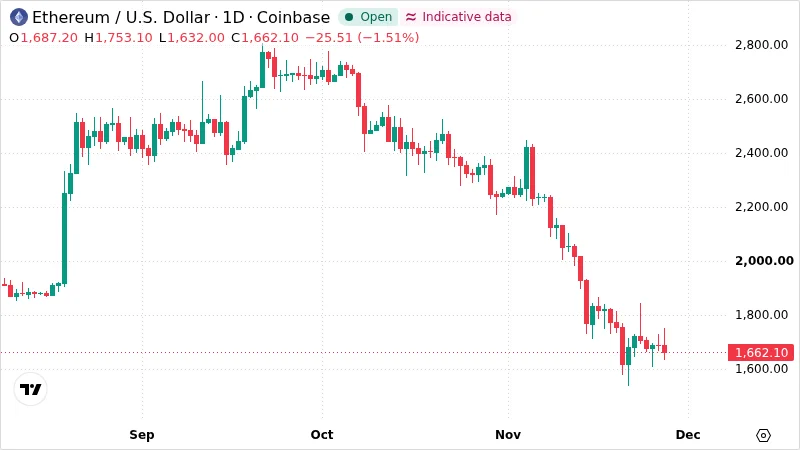
Investors hoping for quick upside from protocol upgrades may need patience; while scaling ambitions remain central to Ethereum’s strategy—with rollups and layer-2s expected to handle much of future transaction volume—the headline numbers show a network still grappling with trade-offs between innovation and stability.
Glamsterdam may promise greater efficiency down the road, but existing projects must now weigh whether their code can weather another round of structural change—or risk being left behind.
What to keep in focus
The Ethereum Glamsterdam upgrade is scheduled to activate on the Hoodi testnet at 19:12 UTC on December 15, and if the new gas pricing rules under EIP-8037 cause smart contracts to fail as previously observed, developers may need to revisit or delay mainnet deployment, which currently has no confirmed date.