
Bitcoin Stash Grows, Shares Shrink
Strategy, led by Michael Saylor, added 267 Bitcoin to its already massive holdings last week, spending $22.1 million at an average price of $82,900 per coin. This latest acquisition, executed between October 12 and 18, brings the company’s total Bitcoin ownership to 848,517 BTC—a figure representing roughly 4% of all Bitcoin in circulation.
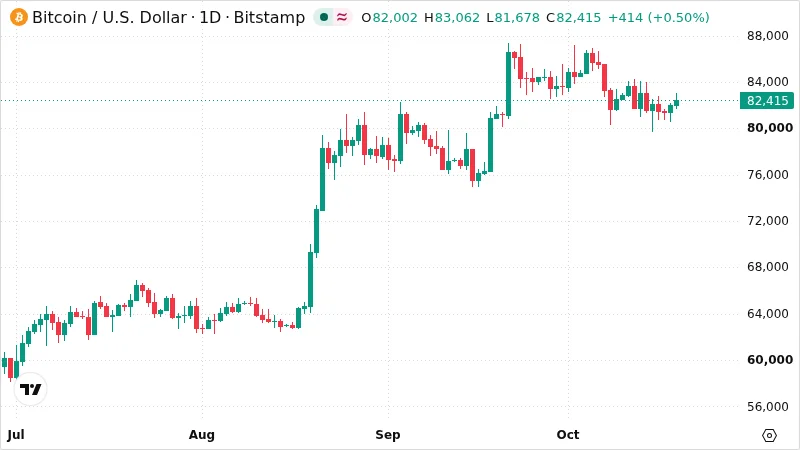
As of October 18, the company's cumulative BTC investment stands at $64.02 billion, with an average entry price of $75,446 per coin. That places Strategy’s average well below the current market price of Bitcoin: as of October 19, BTC trades at $82,491 according to proprietary data, up a modest 0.01% over the past day but nearly flat over the week.
While this purchase is significant in dollar teerms, it is dwarfed by another move: Strategy repurchased nearly two million shares (1,938,780) of its Stretch (STRC) preferred stock for $193.1 million during the same period. The contrast is stark—over eight times more capital was directed toward reducing outstanding STRC than acquiring additional Bitcoin.
In the fourth quarter so far, $459.2 million has been spent on STRC buybacks, compared to $72.3 million allocated for 851 Bitcoin.
MSTR Sale Funds Latest Bitcoin Buy
To fund its latest BTC acquisition, Strategy sold 140,872 shares of its own common stock (MSTR), raising about $22 million. Only a small portion—$0.1 million—came from cash reserves. This approach allows the company to maintain liquidity while still expanding its crypto treasury.
No MSTR shares were bought back last week; all buyback efforts focused on STRC.
This funding method highlights a nuanced balance between leveraging equity markets and maintaining exposure to digital assets. The decision not to repurchase any MSTR shares during this window may reflect a prioritization of shoring up preferred stock value or simply opportunistic timing based on market conditions.
$193M STRC Buyback Overshadows BTC Spend
The headline number for Bitcoin purchases may catch attention, yet the larger story is the aggressive buyback of STRC preferred stock. In just the fourth quarter alone, Strategy has spent $459.2 million buying back STRC shares—compared to only $72.3 million devoted to acquiring 851 BTC in that same timeframe.
According to cointelegraph.com, STRC is a variable-rate preferred security designed to pay regular dividends. The company backs these obligations with a sizable USD Reserve of $4.83 billion as of October 18 and maintains an additional $447.3 million in cash holdings for flexibility in meeting dividend and debt payments.
The scale of these buybacks suggests that management sees more immediate value or necessity in tightening the supply of its preferred stock than in further accelerating Bitcoin accumulation—at least for now.
See Also
Buyback Authorization Swells to $3 Billion
On Monday, Strategy’s board approved an increase in its digital credit securities repurchase authorization from $2 billion to $3 billion—a substantial expansion that leaves $1.16 billion still available under the program as of October 18. This move provides further firepower for additional STRC repurchases should market conditions warrant.
Meanwhile, cash positions have shifted: USD Cash fell from $640.5 million to $447.3 million over the past week, while the USD Reserve dropped slightly by about $50 million but remains robust at nearly $4.83 billion.
These numbers indicate ongoing capital deployment but also a deliberate effort to keep reserves healthy amid active buybacks and crypto purchases.
MSCI Rule Looms Over Strategy’s Status
A new rule finalized by MSCI on October 15 could soon impact Strategy's standing in global indexes: starting November 30, “non-operating companies” will be excluded from MSCI’s Global Investable Market Indexes. The list of affected firms will be published November 11; it remains uncertain whether Strategy will be included.
This regulatory development introduces a note of caution just as the firm expands both its Bitcoin holdings and buyback programs—a reminder that external classification can alter investor access regardless of underlying asset strength or capital strategy.
Key developments ahead
MSCI will publish on November 11 the list of companies affected by its new rule excluding "non-operating companies" from Global Investable Market Indexes effective November 30; if Strategy is included, it could face immediate index-related outflows.