
Outflows Smash Records, Bitcoin Stumbles
November 2026 has seen spot Bitcoin ETFs in the United States post their largest-ever monthly net outflows, with the total reaching $4.71 billion as of Monday.
The headline figure is stark: nearly $5 billion has been pulled from US-listed spot Bitcoin ETFs in a single month, according to cointelegraph.com. Yet the context is messier—just a quarter earlier, these same products attracted $6.34 billion in net inflows, highlighting how quickly investor flows can reverse.
Six Days Running: Withdrawals Continue
ETF outflows have not been limited to isolated events; instead, they have persisted for six straight trading days. On Tuesday alone, investors withdrew $231.6 million from US spot Bitcoin ETFs, extending a streak that has now lasted more than a week. The cumulative effect is significant: over the last 20 trading days, net outflows have reached $4.3 billion.
This sustained exodus marks the first time since January 2024 that monthly outflows are on track to breach the $5 billion threshold.
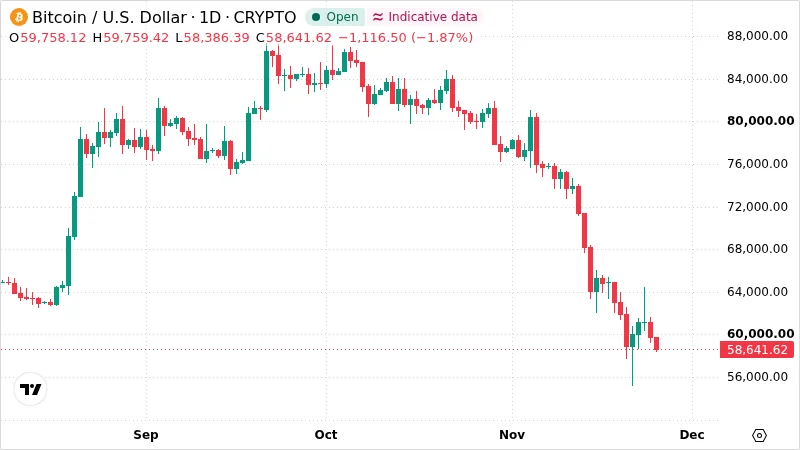
Despite this steady bleed from ETFs, BlackRock’s IBIT managed to close Monday up 4.85% at $34.62 before slipping 1.3% overnight—a microcosm of the volatility seen across crypto assets this month. Meanwhile, Bitcoin itself dropped 1.8% over 24 hours to around $60,450 by Monday’s close.
See Also
ETF Exodus Surpasses Previous June Peak
November’s ETF withdrawals have already eclipsed June’s record-setting outflow total by more than $200 million. The pace and scale of redemptions reflect mounting concerns among investors about both macroeconomic and sector-specific risks. Teroxx’s November research highlights two main culprits: rising US interest rates and weakness in AI-related equities, which have dampened demand for riskier assets like cryptocurrencies and their associated funds.
US spot Bitcoin ETFs still hold substantial assets—$73.6 billion combined as of Monday—with BlackRock’s IBIT accounting for more than half at $45.64 billion. However, even this sizable base could not prevent realized losses among Bitcoin holders from nearly doubling within a week compared to cumulative inflows over the past year.
Investors Cut Losses, Eye the Bottom
According to decrypt.co, realized losses among Bitcoin investors are now at their highest levels since the FTX collapse in November 2022—a period when BTC traded below $16,000 and market panic was widespread. Glassnode data shows that recent losses have almost doubled within just seven days, erasing gains built up during earlier ETF-fueled rallies.
Bitcoin’s realized price—the average price at which coins last moved—now stands at $53,200, while its correlation with tech-heavy indices like the Nasdaq 100 is at a two-year high.
Why It Matters
For everyday investors and institutions alike, these ETF outflows have immediate consequences: they put pressure on Bitcoin’s price and signal waning confidence in crypto as an inflation hedge or growth asset under current conditions. As of November 25th, our proprietary data places BTC at $58,621—down just 0.03% over 24 hours but off its all-time high of $126,080 set in October 2025. While the month-long decline appears modest at -0.27%, it comes on the heels of much sharper drawdowns earlier in November and reflects broader market uncertainty.
There is an unresolved tension here: while some see this as capitulation and potential groundwork for a rebound if macro conditions stabilize (notably US Treasury yields), others worry that continued ETF redemptions could trigger further downside or even test support near Bitcoin’s realized price of $53,200.
Whether this marks a durable low or just another pause before deeper losses remains uncertain as November draws to a close.
Key variables ahead
If US spot Bitcoin ETF net outflows, which reached a record $4.94 billion in November and have persisted for six consecutive trading days as of Tuesday, continue past the $5 billion monthly threshold for the first time since their January 2024 launch, immediate further pressure on Bitcoin’s price—already down to around $60,450—would be likely; however, whether outflows will slow or reverse remains unclear.