
From $2 Billion Peak to Shutdown
Ethereum layer-2 network Blast is closing its doors less than two years after its much-hyped debut, ending a brief but turbulent run that saw it rise to over $2 billion in total value locked (TVL) before collapsing by more than 98%. The project, launched by the team behind NFT marketplace Blur in November 2023, had attracted over $1.1 billion in deposits even before its mainnet went live in February 2024. By June 2024, TVL soared past $2.2 billion according to DeFiLlama, but that figure has since plummeted to just $32 million as users rushed for the exits.
The speed of Blast’s ascent and subsequent unraveling stands out even in the fast-moving world of crypto infrastructure. The network’s native BLAST token has mirrored this trajectory: following the shutdown announcement, BLAST fell 19% and now trades roughly 98% below its launch price. Blast’s June 2024 airdrop distributed $354 million worth of BLAST tokens to users, but that windfall was quickly overshadowed by the collapse in both token value and user confidence.
Blast’s total value locked dropped from a peak of $2.2 billion in June 2024 to just $32 million by September.
Costs Outpace Revenue, Doors Close
Blast’s demise was not triggered by a single exploit or technical failure but rather a fundamental economic mismatch. The team cited unsustainable operating costs as the key reason for winding down, stating that there was “no credible path to economic sustainability.” In September 2024, Blast generated just $1,793 in network revenue—down from a peak of about $3.5 million in June—while costs continued to mount.
In a piece from coindesk.com, it’s noted that Blast stopped producing blocks after Ethereum’s Dencun upgrade in March 2024, further eroding its viability as an active layer-2 solution. Despite raising $20 million from backers like Paradigm and Standard Crypto and leveraging yield sources such as Lido and MakerDAO to attract users with staking rewards, Blast could not bridge the gap between income and expenses.
Users Face October Withdrawal Deadline
Current users have until October 26, 2024, to withdraw assets through Blast’s standard interface. After this date, funds will remain accessible but only via direct interaction with Blast’s bridge contracts on Ethereum mainnet—a process far less user-friendly for most participants. Withdrawals are temporarily paused while Blast unwinds assets from Lido (a major Ethereum staking protocol), with the process expected to take about one week before normal withdrawals resume with a reduced delay of 24 hours.
After October 26, retrieving funds will require manual contract interaction rather than a simple web interface.
Blast has pledged to publish detailed instructions for direct contract withdrawals before the cutoff date. This transition period echoes recent shutdowns elsewhere: for example, Zerion gave users until July 31 to exit its Zero Network when it closed operations earlier in 2024.
What Drove the Rapid Collapse?
Blast’s design as an optimistic rollup allowed it to pass yield from ETH staking and real-world asset protocols back to users—a structure intended to differentiate it from competing networks. Yet despite this innovation and early momentum (over $1.1 billion deposited pre-launch), revenue could not keep pace with operating costs once initial incentives faded and competition intensified. Notably, Coinbase launched Base and Robinhood introduced their own Ethereum layer-2 networks during the same period, fragmenting user attention and liquidity across multiple platforms.
There is an interesting tension between headline numbers and underlying activity: while TVL peaked at over $2 billion in June 2024, network revenue collapsed soon after as user engagement waned. Investors may have been drawn by early yield opportunities and token incentives rather than long-term utility or sustainable usage—once those dried up, so did participation.
The BLAST token’s crash reflects this dynamic; even a high-profile airdrop could not stem losses as confidence evaporated. It’s unclear whether any technical issues following Ethereum’s Dencun upgrade played a decisive role or merely accelerated an inevitable decline rooted in economics.
Why It Matters: Practical Impact for Users and Ethereum
For everyday users who still hold assets on Blast, the timeline is tight: October 26 marks the last day for straightforward withdrawals via the platform interface. Afterward, anyone seeking to reclaim funds must grapple with direct smart contract interactions—a significant hurdle for non-developers. As of now, roughly $32 million remains on Blast despite its once-massive scale.
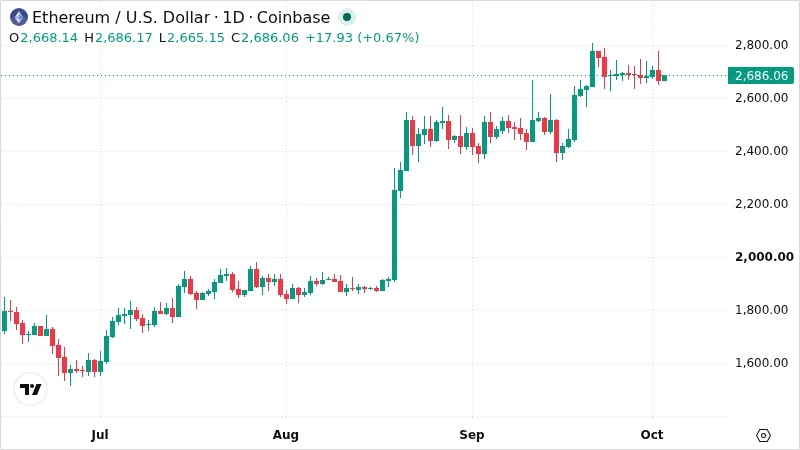
For Ethereum itself—the underlying blockchain supporting all these layer-2s—the broader context is revealing. ETH currently trades at $2,655.32 with little movement over the past month (+0.08% over 30 days), yet remains well below its all-time high of $4,946.05 set in August 2025. This relative price stability contrasts sharply with the volatility seen on experimental layer-2s like Blast; while new scaling solutions come and go rapidly, Ethereum’s core value proposition appears more resilient for now.
Blast’s sudden exit also highlights how quickly fortunes can change in crypto infrastructure—especially when business models hinge on aggressive incentives or short-term speculation rather than organic demand or sustainable economics.
What to monitor next
Users must withdraw assets via Blast’s interface by the October 26, 2024 deadline; if withdrawals are not completed by then, users will need to interact directly with Blast’s bridge contracts on Ethereum, for which instructions are promised but not yet published.