
MSTR’s Record Losing Streak Persists
Shares of Strategy (MSTR) are set to close June down about 41%, marking the company’s worst monthly performance since 2022. With only one trading day left, MSTR is on track for its eleventh losing month out of the past twelve—a stretch that underscores persistent investor unease. The stock, which hit an all-time high of $540 per share in November 2024, has since lost roughly three-quarters of its value as bitcoin prices slumped and new capital instruments entered the picture.
On Friday, MSTR shares briefly dipped near $80 before a sharp rally of over 12% on Monday, sparked by news of a sweeping new capital management framework. Despite this bounce, the broader trend remains negative: since July’s launch of Strategy’s perpetual preferred security, STRC, both the company and bitcoin have suffered steep declines. While bitcoin has dropped nearly 50% since STRC’s debut, MSTR itself is down around 77% over the same period.
Since the STRC IPO last July, bitcoin has fallen by almost 50% and MSTR shares by roughly 77%.
Bitcoin Sales Plan Roils Crypto Markets
On Monday, Strategy announced it may sell up to $1.25 billion worth of bitcoin to raise cash for dividends, buybacks, and debt payments—effectively ending its long-held “never sell” policy regarding its digital reserves. The change comes as part of the newly unveiled “Digital Credit Capital Framework,” which also includes a $2.55 billion reserve meant to cover at least 12 months’ worth of preferred stock dividends and interest obligations.
The market did not take this development lightly. Bitcoin hovered near $59,514 after the announcement, down 7% on the week and more than 20% for the month. Major altcoins followed suit: ether (ETH) slid 8.2% over seven days to about $1,587; dogecoin (DOGE) tumbled nearly 12%; and XRP fell just over 7%. Only solana (SOL) bucked the trend with a modest gain of roughly 3% on Tuesday. As reported by coindesk.com, Strategy’s move as the largest corporate bitcoin holder placed additional pressure on an already fragile market.
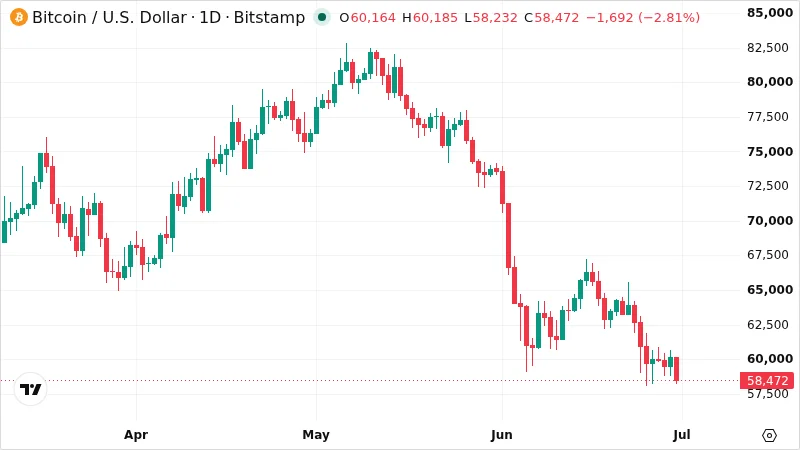
For many traders, the abrupt shift in Strategy’s stance raised fresh questions about corporate conviction in holding digital assets through volatility.
See Also
Perpetual Preferred STRC Reshapes Investor Choices
The introduction of STRC—the company’s perpetual preferred security—has dramatically altered investor dynamics since July. STRC sits above common stock in Strategy’s capital structure and offers a less volatile alternative for those seeking exposure to the company’s bitcoin strategy without direct participation in wild price swings. On paper, this diversification should have cushioned overall volatility for investors; but in reality, it coincided with accelerated declines in both MSTR shares and bitcoin itself.
This week’s changes included raising STRC’s annual dividend to 12%, up from 11.5%. The company also authorized $2 billion in buybacks split evenly between common and preferred shares—a move designed to support both investor classes amid ongoing market stress.
Why it matters: Practical Impact for Investors
Strategy’s revised approach signals a more active management style: CEO Phong Le confirmed the firm will issue or repurchase securities as needed rather than simply accumulating bitcoin passively. The $1.25 billion bitcoin monetization program provides flexibility to meet obligations and return value via dividends or buybacks—yet it also means that future price rallies may not translate directly into higher per-share value if reserves are sold off during downturns.
The cash reserve now stands at $2.55 billion—enough to cover about 17 months’ worth of preferred stock dividends and interest payments—but under new rules must always be maintained at no less than a year unless board approval is granted otherwise. For existing shareholders, this offers some reassurance regarding liquidity but does little to reverse recent losses.
Major Altcoins Suffer Collateral Damage
Strategy’s announcement reverberated beyond its own stock or even bitcoin itself. Ether (ETH), dogecoin (DOGE), XRP, and BNB all posted losses ranging from about 6% to nearly 12% over seven days following news that Strategy could liquidate part of its massive BTC holdings. At the same time, network activity on bitcoin remains subdued: Glassnode data shows active addresses around just 618,000 and daily transaction value hovering near $4.2 billion—barely above cycle lows.
It’s unclear whether this shift will restore confidence or further erode trust among crypto investors watching both corporate strategies and token prices with growing skepticism.
The Final Word
- •Strategy (MSTR) may sell up to $1.25 billion in bitcoin under its new “Digital Credit Capital Framework” announced Monday.
- •The company established a $2.55 billion reserve, covering at least 12 months of preferred stock dividends and interest payments.
- •MSTR’s stock fell about 41% in June 2024, marking its 11th losing month out of the past 12.
Areas to watch closely
If Strategy proceeds with selling up to $1.25 billion in bitcoin under its new Digital Credit Capital Framework, immediate impacts could include further pressure on bitcoin’s price and heightened volatility across major cryptocurrencies, as seen after Monday’s announcement when MSTR and STRC shares surged 13% and 12% respectively; however, the exact timing and scale of these bitcoin sales remain unclear.