
High Court Sides With UK Treasury
A pivotal decision from London’s High Court has narrowed the legal avenues for more than 128,000 Chinese investors seeking to reclaim 61,000 Bitcoin—currently valued at roughly $5 billion—from the British government. The assets were seied by London’s Metropolitan Police during their investigation into Zhimin Qian, who was convicted in 2023 for orchestrating a Ponzi scheme through her company, Tianjin Lantian Gerui Electronic Technology, between 2014 and 2017. Justice Mark Turner ruled that claims to the seized cryptocurrency must be governed by Chinese law rather than English law, rejecting arguments from victims’ lawyers that English or a hybrid of both legal systems should apply.
This ruling does not immediately resolve who will ultimately control the Bitcoin but significantly strengthens the UK Treasury’s position. Thousands of fraud victims had hoped to leverage English law for a more straightforward route to restitution under the Proceeds of Crime Act. Instead, they now face a steeper climb: each claimant must individually prove their proprietary interest in the coins under Chinese legal standards—a process likely to be far more complex and restrictive.
More than 61,000 BTC were seized by the Metropolitan Police during their investigation into Zhimin Qian’s activities.
English Law Ruled Out for Claims
The court’s decision hinged on where the fraud occurred and where the contracts originated. Justice Turner found that all key events—the fraudulent investment contracts, the victims’ payments totaling about RMB 40.2 billion (roughly £4.1 billion), and the subsequent conversion of stolen funds into Bitcoin—took place in China.
As reported by coindesk.com, this led Turner to conclude that Chinese law must govern any claims to the digital assets, dismissing attempts by claimants’ lawyers to invoke English law as a basis for recovery. The judge also noted there is no broad compensation scheme available under current legislation; instead, only those able to establish direct ownership rights in specific coins may have a chance at recovery.
For many victims, being defrauded alone isn’t enough to secure a claim under these circumstances.
$5B Bitcoin Haul in Legal Limbo
The seized Bitcoin remains in legal limbo as appeals proceed and further hearings are scheduled. The cryptocurrency’s value has continued to fluctuate: as of October 13, 2026, Bitcoin trades at $83,526 per coin—barely changed over the last week (+0.01% in 24 hours; -0.03% over seven days)—yet still far below its all-time high of $126,080 set on October 6, 2025. At current prices, the 61,000 BTC stash is worth approximately $5 billion, underscoring just how much is at stake for both sides.
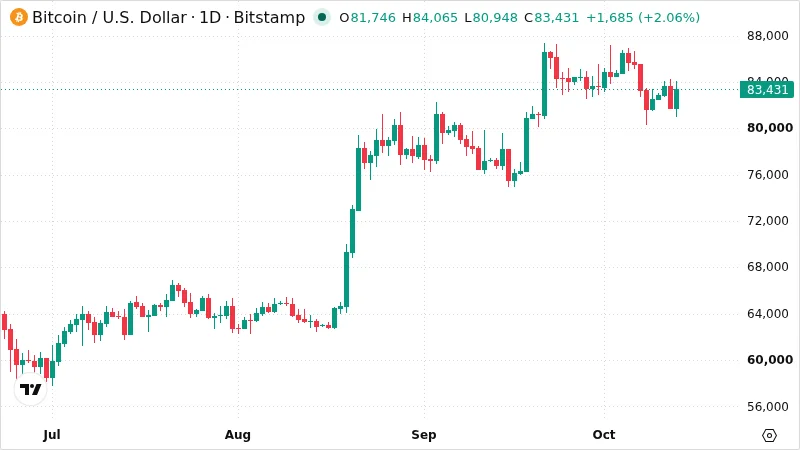
The contrast between headline figures and practical outcomes is stark: while thousands seek restitution for losses dating back nearly a decade, only those able to navigate the intricacies of Chinese property law stand any realistic chance of recovering even a portion of their investments. Meanwhile, UK authorities—having already secured devices and private keys linked to Qian’s holdings after she fled China in 2017—are positioned to benefit if claimants falter under these new legal constraints.
Why It Matters
This case sets an important precedent not just for cross-border crypto seizures but also for how courts determine applicable law when digital assets are involved in international frauds. The High Court’s ruling effectively raises the bar for foreign victims hoping to recover assets held by UK authorities: it’s not enough to show you were defrauded; you must also meet stringent requirements based on your home country’s property laws.
For policymakers and investors alike, an emerging tension between national asset forfeiture regimes and globalized digital finance. The British government now stands a better chance of retaining one of the largest crypto hauls ever seized—but this outcome rests heavily on how Chinese courts might interpret proprietary interests in Bitcoin if consulted during upcoming hearings.
Next Steps Hinge on Chinese Law
Law firm Fieldfisher, representing many of the claimants, has already filed an appeal against Justice Turner’s decision. The next phase will see expert testimony on Chinese property law presented before London’s High Court—a process that could take months or longer given the scale (over 128,000 contracts) and complexity involved. A further hearing will determine whether any individual victim can prove an enforceable interest in any part of the seized Bitcoin trove.
Ultimately, while thousands remain hopeful for restitution after years of waiting, ownership of this $5 billion crypto fortune remains uncertain—and may well hinge on technicalities buried deep within Chinese statutes rather than any UK precedent.
Essential Points
- •On October 12, 2023, London’s High Court ruled that Chinese law governs claims to 61,000 BTC (worth $5 billion) seized from Zhimin Qian.
- •The case involves over 128,000 Chinese investors defrauded between 2014 and 2017 by Zhimin Qian’s Ponzi scheme via Tianjin Lantian Gerui Electronic Technology.
- •Each claimant must individually prove a proprietary interest in the Bitcoin under Chinese law; an appeal and further hearings are pending.
What to monitor next
The next key event is a further hearing in the London High Court, where expert evidence on Chinese law will determine if any of the more than 128,000 fraud victims can establish a proprietary interest in the 61,000 BTC seized by UK authorities; if no such interest is proven, the U.K. Treasury could retain the $5 billion in bitcoin, but the timing of this hearing remains unclear and is not yet confirmed.